
Your taste buds are responsible for detecting the five basic tastes, including umami, which is often referred to as the fifth taste. Umami is associated with savory, meaty, and brothy flavors, and it plays a significant role in the way you experience food.
The Discovery of Umami
Around the turn of the 20th century, a Japanese chef and chemist discovered a new taste that he couldn’t classify as sweet, sour, bitter, or salty, and he named it umami, which roughly translates to “pleasant savory taste” in Japanese.
Umami Receptors and Perception
Towards understanding how you perceive umami, it’s interesting to note that your tongue has specialized receptors that can detect glutamates, which are the amino acids responsible for umami taste, and these receptors send signals to your brain, allowing you to experience the rich, savory flavor of umami.
Umami receptors are found on your taste buds, and when glutamates bind to these receptors, they trigger a response that allows you to perceive the umami taste, and as you explore different foods and flavor combinations, you’ll find that umami is a key component of many rich and satisfying flavors, from the depths of a hearty broth to the intensity of a perfectly aged cheese, and by understanding how umami works, you can enhance your appreciation of these flavors and develop your own unique approach to cooking and eating.
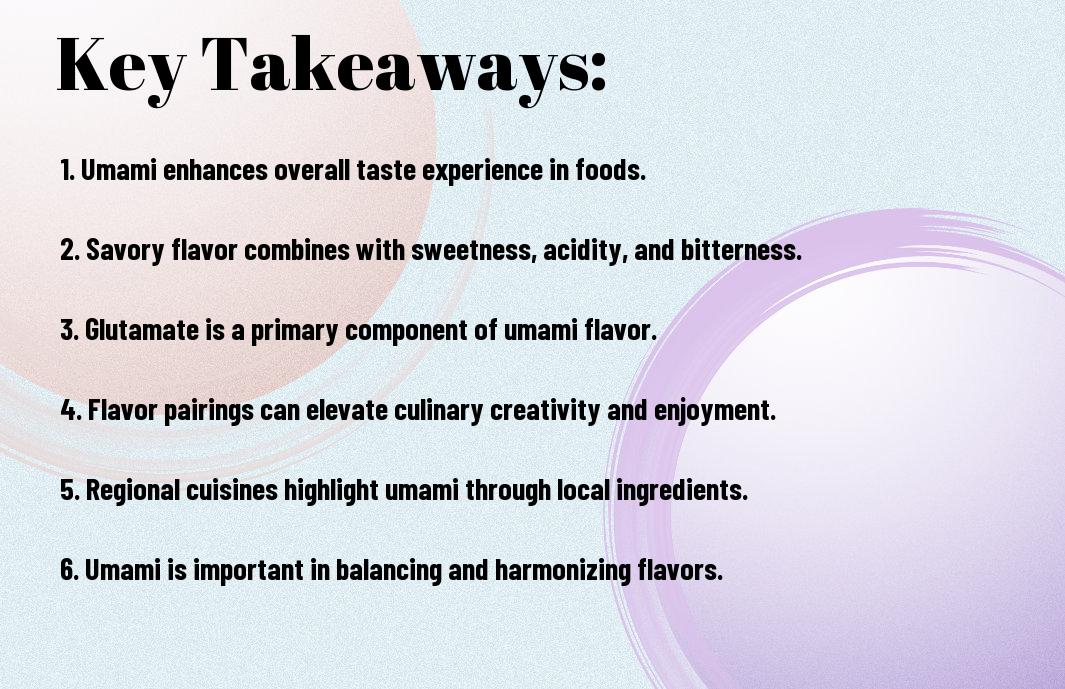

Flavor Profiles and Umami
Some of the most complex and engaging flavors you’ll encounter are those that combine multiple elements, including umami. As you explore the science behind umami, you’ll discover how it enhances and balances your favorite dishes.
Umami-Rich Foods
Beneath the surface of many savory foods lies a depth of umami flavor. You’ll find it in meats, seafood, vegetables, and even some fruits, waiting to be coaxed out by your culinary skills.
Balancing Umami in Recipes
Following the principles of umami, you can create dishes that are both nuanced and satisfying. You’ll learn to balance umami with other flavors, resulting in recipes that are truly greater than the sum of their parts.
Recipes that successfully balance umami often rely on a combination of ingredients, each contributing its own unique character. As you experiment with umami-rich foods, you’ll develop a sense of how to harmonize these flavors, creating dishes that resonate with your taste buds and leave you wanting more. You’ll find that balancing umami is an art that requires a deep understanding of how different ingredients interact, and how you can use them to craft recipes that are both delicious and visually appealing.
The Chemistry of Umami
All the flavors you experience, including umami, are a result of chemical reactions on your taste buds. As you explore the science behind umami, you’ll discover the complex interactions that create this distinct taste sensation.
Glutamates and Nucleotides
Beneath the surface of umami flavor lie glutamates and nucleotides, the compounds responsible for its rich, savory taste. You’ll find these naturally occurring substances in many foods, from meats to vegetables, and they’re also used as flavor enhancers in various products.
Umami Enhancement and Synergy
Likewise, glutamates play a significant role in umami enhancement and synergy, as they amplify the overall flavor experience. You can notice this effect when combining ingredients like mushrooms, soy sauce, and fish, which creates a harmonious balance of tastes.
Another aspect of umami enhancement and synergy is the way it affects your perception of other flavors. As you combine umami-rich ingredients with sweet, sour, or bitter flavors, you’ll notice how they interact and influence each other, creating a more complex and engaging taste experience. You can experiment with different combinations to discover how umami enhances the overall flavor profile of your dishes.
Cultural Significance of Umami
Now that you’ve discovered the science behind umami, let’s explore its cultural significance. Umami is a fundamental element in many cuisines, elevating dishes and creating depth of flavor.
Umami in Traditional Cuisines
Any exploration of umami must consider traditional cuisines, where you’ll find it used to enhance flavors in dishes like Japanese dashi or Italian parmesan cheese, adding richness to your culinary experience.
Umami in Modern Food Culture
By embracing umami, you can take your cooking to the next level, as modern chefs and home cooks alike are discovering new ways to incorporate this flavor into your recipes, from savory sauces to umami-rich vegetables.
Umami is becoming increasingly popular in modern food culture, as you experiment with new ingredients and flavor combinations, discovering how umami can balance and elevate the flavors in your favorite dishes, and even creating new, innovative flavors that delight your palate and broaden your culinary horizons.
Pairing Umami with Other Flavors
Unlike other flavors, umami can elevate and balance your dishes when combined with other tastes, allowing you to create complex and harmonious flavor profiles that enhance your culinary experience.
Umami and Sweetness
Beneath the surface of many sweet dishes, umami flavors can add depth and interest, as you discover how sweetness can bring out the best in umami, creating a delightful harmony of flavors in your cooking.
Umami and Spiciness
With the combination of umami and spiciness, you can create a truly captivating flavor experience, as the heat from spicy ingredients complements the richness of umami, leaving you wanting more of this dynamic duo in your recipes.
But as you explore the pairing of umami and spiciness, you’ll find that the right balance is key, as too much heat can overpower the subtle nuances of umami, so you’ll need to experiment to find the perfect equilibrium that works for your taste, allowing you to fully appreciate the synergy between these two flavors in your cooking.
Applications of Umami in Cooking
For chefs and home cooks alike, understanding umami is key to creating dishes with depth and richness. You can leverage umami to balance and enhance your recipes, adding complexity to even the simplest of meals.
Umami-Rich Ingredients
Around the world, you’ll find ingredients that naturally contain high levels of umami flavor, which you can use to add depth to your cooking.
Techniques for Enhancing Umami
Beside using umami-rich ingredients, you can also employ various cooking techniques to bring out the umami flavor in your dishes, allowing you to create rich and savory meals with ease.
Cooking methods such as caramelization, braising, and roasting can enhance the umami flavor in your ingredients, as these processes break down proteins and concentrate the naturally occurring glutamates. As you experiment with these techniques, you’ll find that your dishes become more complex and satisfying, with a depth of flavor that will leave your guests wanting more. You can apply these methods to a wide range of ingredients, from meats and vegetables to grains and legumes, to create a variety of delicious and umami-rich meals.
Conclusion
As a reminder, you now have a deeper understanding of the science behind umami and flavor pairing. You can apply this knowledge to elevate your cooking by exploring The Science behind great ingredient pairings to create harmonious and delicious dishes, taking your culinary skills to the next level, and enhancing your overall dining experience, as you experiment with your new knowledge of flavor combinations and umami’s role in your cooking.


