
As you explore the world of wine, you’ll likely encounter numerous misconceptions that can impact your understanding and appreciation of it. Your perception of wine is shaped by the information you receive, and separating fact from fiction is vital. In this article, you will discover the truth behind common wine myths, allowing you to make informed decisions and enhance your wine-drinking experience. You will learn to navigate the world of wine with confidence, uncovering the realities behind these widespread misconceptions.
Separating Fact from Fiction
While exploring the world of wine, you’ll encounter numerous myths and misconceptions. As you probe deeper, you’ll discover that many of these myths are far from the truth, and understanding the facts will enhance your wine-drinking experience.
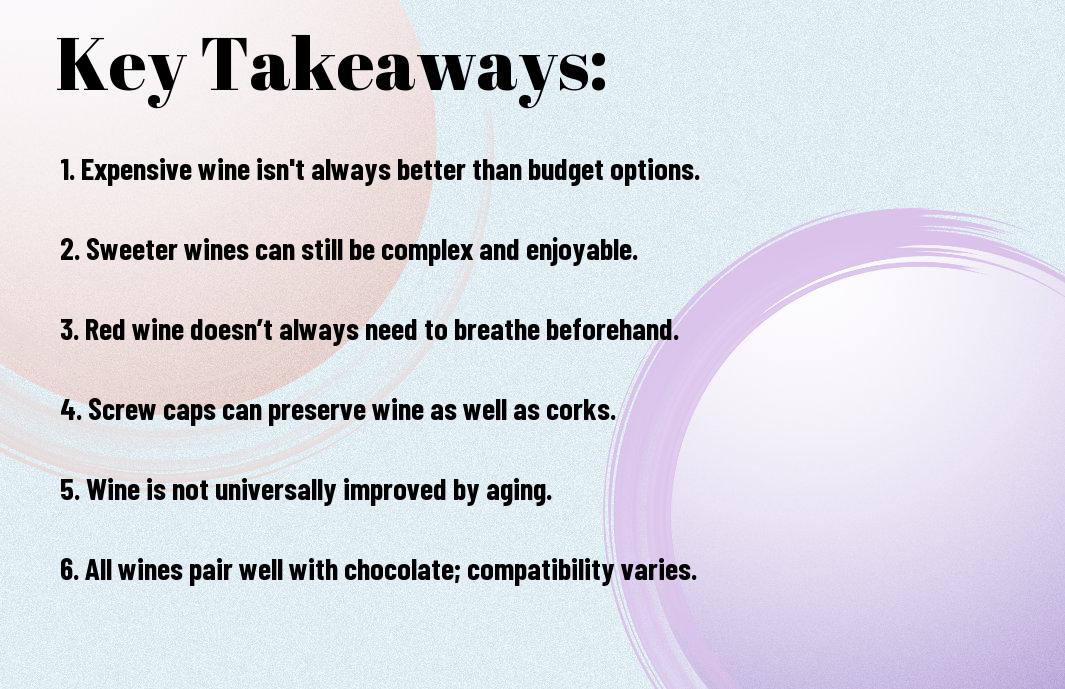
The idea that expensive wine is always better
Around the globe, you’ll find that the price of wine doesn’t always dictate its quality, and you can find excellent wines at various price points, allowing you to enjoy great taste without breaking the bank.
The notion that red wine is only for special occasions
The traditional view that red wine is reserved for special occasions is outdated, and you can enjoy it whenever you like, pairing it with your favorite dishes to elevate your everyday meals.
In fact, you can make red wine a part of your regular routine, exploring different types and finding the ones that suit your taste preferences, and discovering how it can complement a wide range of foods, from casual dinners to formal events, making every occasion special.
Wine and Food Pairing Myths
Any wine enthusiast knows that pairing wine with food can be a complex process. You may have heard various myths surrounding wine and food pairing, but it’s time to set the record straight. Your understanding of wine and food pairing will be broadened as you learn the truth behind these common myths.
The myth that white wine is only for fish and poultry
The traditional rule that white wine is only suitable for fish and poultry is outdated. You can pair white wine with a variety of dishes, including pork, vegetarian options, and even some red meats, depending on the specific type of wine and your personal taste.
The misconception that red wine can’t be paired with dessert
Pairing red wine with dessert may seem unconventional, but it can be a great combination. You can experiment with different types of red wine, such as a fruity Merlot or a sweet Port, to find the perfect match for your favorite desserts.
Food pairings with red wine and dessert can be surprisingly successful. You might consider pairing a rich, fruity red wine with a chocolate-based dessert, or a sweet, fortified wine with a fruity or nutty dessert. As you explore different combinations, you’ll discover that your palate can handling a wide range of flavors, and you’ll become more confident in your ability to create unique and delicious pairings.
Wine Storage and Serving Myths
After exploring various wine-related myths, you’ll find that storage and serving are areas where misconceptions abound. You may have heard that specific conditions are necessary to preserve wine’s quality, but what’s fact and what’s fiction?
The idea that wine must be stored in a humid cellar
Beside the common belief, you can store wine in a cool, dark place with moderate humidity, not necessarily a humid cellar. This will help preserve the wine’s quality without needing a dedicated wine cellar.
The notion that wine should always be served at room temperature
Beneath the surface of this myth lies a more nuanced truth. You can serve wine at various temperatures, depending on the type.
| Wine Type | Temperature |
|---|---|
| Red | 60-65°F |
| White | 45-50°F |
But as you investigate deeper, you’ll find that serving temperature significantly affects the taste and aroma of your wine.
| Wine Style | Temperature |
|---|---|
| Full-bodied red | 65°F |
| Light-bodied white | 45°F |
Health Benefits and Risks
Once again, you may have heard conflicting information about the health effects of wine, leaving you unsure what to believe. As you explore the relationship between wine and your well-being, it’s imperative to separate fact from fiction.
The myth that wine is a cure-all for health problems
Behind the hype surrounding wine’s potential health benefits, you’ll find that moderation is key to avoiding potential risks. You should be aware that excessive wine consumption can lead to negative health consequences.
The misconception that all wine is high in calories and sugar
At the heart of the matter, you’ll discover that not all wines are created equal when it comes to calorie and sugar content. You can make informed choices by understanding the variations between different types of wine.
The truth is, your wine selection can significantly impact your calorie and sugar intake. The calorie and sugar content in wine varies greatly depending on factors such as the grape variety, wine style, and winemaking techniques, allowing you to choose wines that fit your dietary preferences and needs.
Wine Tasting and Appreciation
All wine enthusiasts know that there are many misconceptions surrounding wine tasting and appreciation. You may have heard that you need to be an expert or have a refined palate to truly enjoy wine, but this couldn’t be further from the truth.
The idea that you need to be an expert to appreciate wine
Necessarily, you should understand that wine appreciation is subjective, and your opinion is what matters most when it comes to enjoying a glass of wine. You don’t need to have extensive knowledge to appreciate the nuances of wine.
The notion that wine tasting is only for snobs
Among the many misconceptions about wine, this notion is particularly misleading, as you can enjoy wine tasting regardless of your background or social status. You can explore different types of wine and develop your own taste preferences.
That being said, you’ll find that wine tastings are often informal and welcoming events, where you can meet fellow wine enthusiasts and learn from their experiences. You can ask questions, share your thoughts, and discover new wines in a relaxed and friendly atmosphere, making wine tasting an enjoyable experience for anyone.
Regional Wine Myths
Keep in mind that regional wine myths can be misleading, affecting your wine choices. You may have preconceived notions about wine regions, but it’s necessary to separate fact from fiction.
The myth that only European wines are worth drinking
Between the prestigious wine regions of Europe, you may think that only they produce high-quality wines, but this is not the case. You can find excellent wines from other regions, offering unique characteristics and flavors.
The misconception that New World wines are inferior
One of the most common misconceptions is that New World wines are inferior to their European counterparts. You may have heard that these wines lack the complexity and sophistication of European wines, but this is not entirely true.
Wines from New World regions, such as the United States, Australia, and South America, have gained recognition for their high quality and innovative winemaking techniques. You can explore a wide range of styles and flavors, from full-bodied reds to crisp whites, and discover that these wines can hold their own against European counterparts, offering you a unique and exciting drinking experience.
Final Words
Conclusively, you now have a better understanding of the truth behind common wine myths. You can enhance your knowledge by visiting 10 Wine Myths: Separating Fact from Fiction to explore more about your favorite wine, allowing you to make informed decisions and appreciate your next glass even more, enriching your overall wine experience.


