
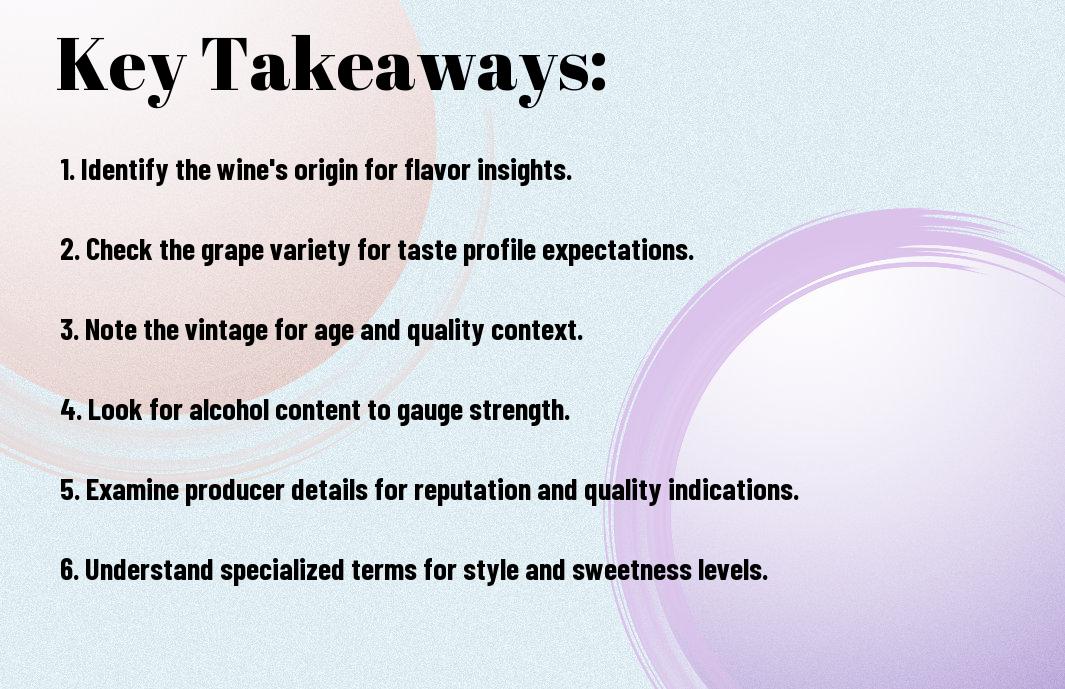
You stand in front of a wine shelf, surrounded by bottles with labels that seem to speak a foreign language. You want to make an informed choice, but the terminology is unfamiliar. As you begin to explore the world of wine, you’ll encounter a multitude of labels, each telling a story about the wine inside. Your journey to understanding these labels starts here, and with a few simple steps, you’ll be able to decipher the information and choose a wine that suits your taste.
Breaking Down the Label
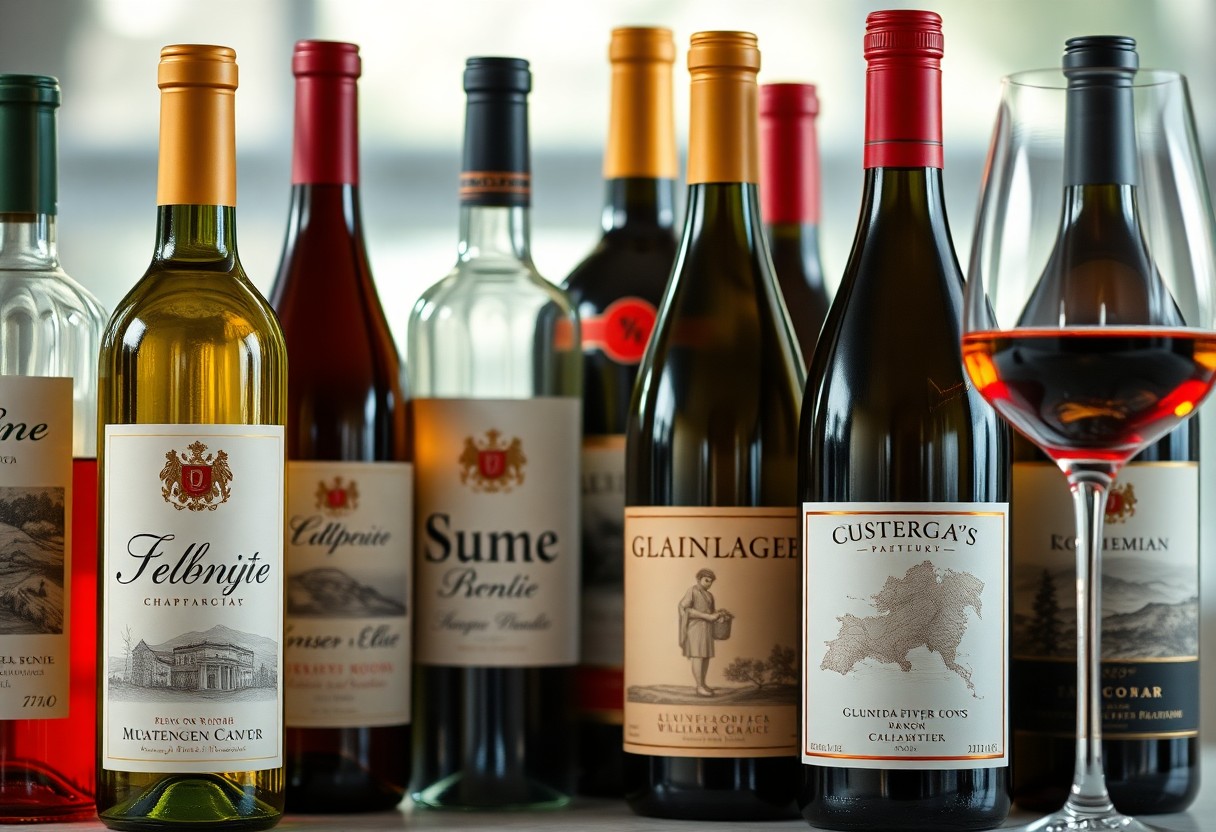
Your journey to understanding wine labels begins with a closer look at the elements that make up the label, and what each part tells you about the wine inside the bottle.
Basic Components
Around the edges of the label, you’ll find the producer’s name, the wine’s region, and the vintage year, all of which give you a sense of the wine’s origins and character.
Label Terminology
For instance, terms like “Reserve” or “Estate Bottled” can indicate the wine’s quality and production methods, giving you a better understanding of what to expect from the wine.
It is worth noting that understanding these terms can help you make informed decisions when selecting a wine, as they often signify specific standards or practices in the winemaking process, allowing you to choose a wine that suits your taste preferences and budget, and you will find that learning about these terms will enhance your wine drinking experience.
Country of Origin
Assuming you’re trying to decipher a wine label, the country of origin is a good place to start. You’ll typically find it at the top of the label, and it can give you a sense of the wine’s overall style and character. Your knowledge of different countries’ wine-making traditions will help you narrow down your options and find a wine that suits your taste.
Regional Wine Laws
Following your initial glance at the country, you’ll want to consider the regional wine laws that govern the production of the wine. You’ll find that these laws vary greatly from country to country, and they can impact the quality and consistency of the wine. Your understanding of these laws will help you make a more informed decision when selecting a wine.
Geographical Indicators
Around the world, geographical indicators are used to identify the specific region where the wine was produced. You’ll see terms like “Bordeaux” or “Tuscany” on the label, and these can give you a sense of the wine’s terroir and quality. Your familiarity with these indicators will help you navigate the wine list with confidence.
The geographical indicators on a wine label can be quite specific, indicating not just the region but also the specific village or vineyard where the grapes were grown. You can use this information to explore different wines from the same region, comparing their flavor profiles and prices to find the one that best suits your taste and budget. As you become more familiar with geographical indicators, you’ll be able to make more informed decisions and discover new wines to enjoy.
Wine Classification
Not all wine labels are created equal, and understanding the classification system can help you navigate the world of wine. You can learn more about How to Read Wine Labels | Wine Guide to get started.
Types of Wine
You’ll encounter various types of wine, including:
- Red
- White
- Rosé
- Sparkling
- Dessert
This will help you make informed decisions when choosing a wine.
| Wine Type | Description |
|---|---|
| Red | Full-bodied, rich flavor |
| White | Crisp, refreshing taste |
| Rosé | Fruity, floral notes |
| Sparkling | Bubbly, celebratory wine |
| Dessert | Sweet, indulgent treat |
Quality Control
To ensure you’re getting a high-quality wine, look for certifications like DOC or AOC. You can trust that your wine has met certain standards.
It is important to check the label for authenticity and adherence to regulations. You want to be confident in your purchase, and proper quality control gives you peace of mind when selecting a wine.
Grape Varieties and Blends
All wine labels feature the type of grape used to make the wine. You’ll see single varieties or blends, each with its own characteristics. As you explore wine labels, you’ll become more familiar with the different types.
Popular Grape Varieties
Across the world, certain grape varieties stand out, such as Chardonnay, Merlot, and Cabernet Sauvignon. You’ll find these on labels, indicating the wine’s style and flavor profile.
Blend Composition
Beside the grape variety, the blend composition is also listed, showing the proportion of each grape used. You can use this information to anticipate the wine’s taste and aroma.
The blend composition can be a key factor in determining the overall character of the wine. As you study the label, you’ll notice that the proportion of each grape variety can vary, allowing you to tailor your selection to your personal taste preferences, and you’ll find that understanding blend composition helps you make informed choices when selecting a wine to enjoy.
Producer Information
Many wine labels include information about the producer, which can help you understand the wine’s origin and calidad. You’ll typically find the producer’s name, address, and other relevant details.
Winery and Vineyard
Insights into the winery and vineyard can be found on the label, providing you with a glimpse into the wine’s production process. You can look for phrases that indicate the winery’s location and ownership.
Wine Maker’s Notes
Producers often include notes about the wine, offering you a personal perspective on the flavor profile and characteristics. You can use this information to guide your expectations and appreciation of the wine.
Wine enthusiasts like you will appreciate the additional details found in the Wine Maker’s Notes section. You can learn about the wine’s aging process, grape variety, and other technical aspects that influence the final product, allowing you to make informed decisions when selecting a wine that suits your taste.
Additional Information
Unlike other labels, wine labels can be overwhelming, but understanding them is key to selecting a great wine. You’ll find various details that can influence your decision, from the region to the vintage year.
Age and Vintage
Across different wine regions, you’ll notice the vintage year printed on the label, indicating the year the grapes were harvested. You can use this information to determine the wine’s age and potential quality.
Awards and Recognition
Recognizing the awards and accolades on a wine label can give you insight into the wine’s excellence. You’ll see medals, trophies, or special mentions that indicate the wine has been judged and praised by experts.
Plus, as you explore the world of wine, you’ll discover that these awards can impact your perception of the wine’s quality and value. You’ll be able to make more informed decisions when selecting a wine, and you’ll appreciate the effort that goes into producing a award-winning wine, which can enhance your overall wine-drinking experience.
Summing up
Now you’ve got the basics down, you can approach wine labels with confidence. You’ll be able to decipher your way through the terminology and find the perfect bottle to suit your taste. Your newfound knowledge will enhance your wine-drinking experience, allowing you to appreciate the nuances of each vintage and variety. You’ll be able to make informed choices, exploring different wines and discovering new favorites.


